
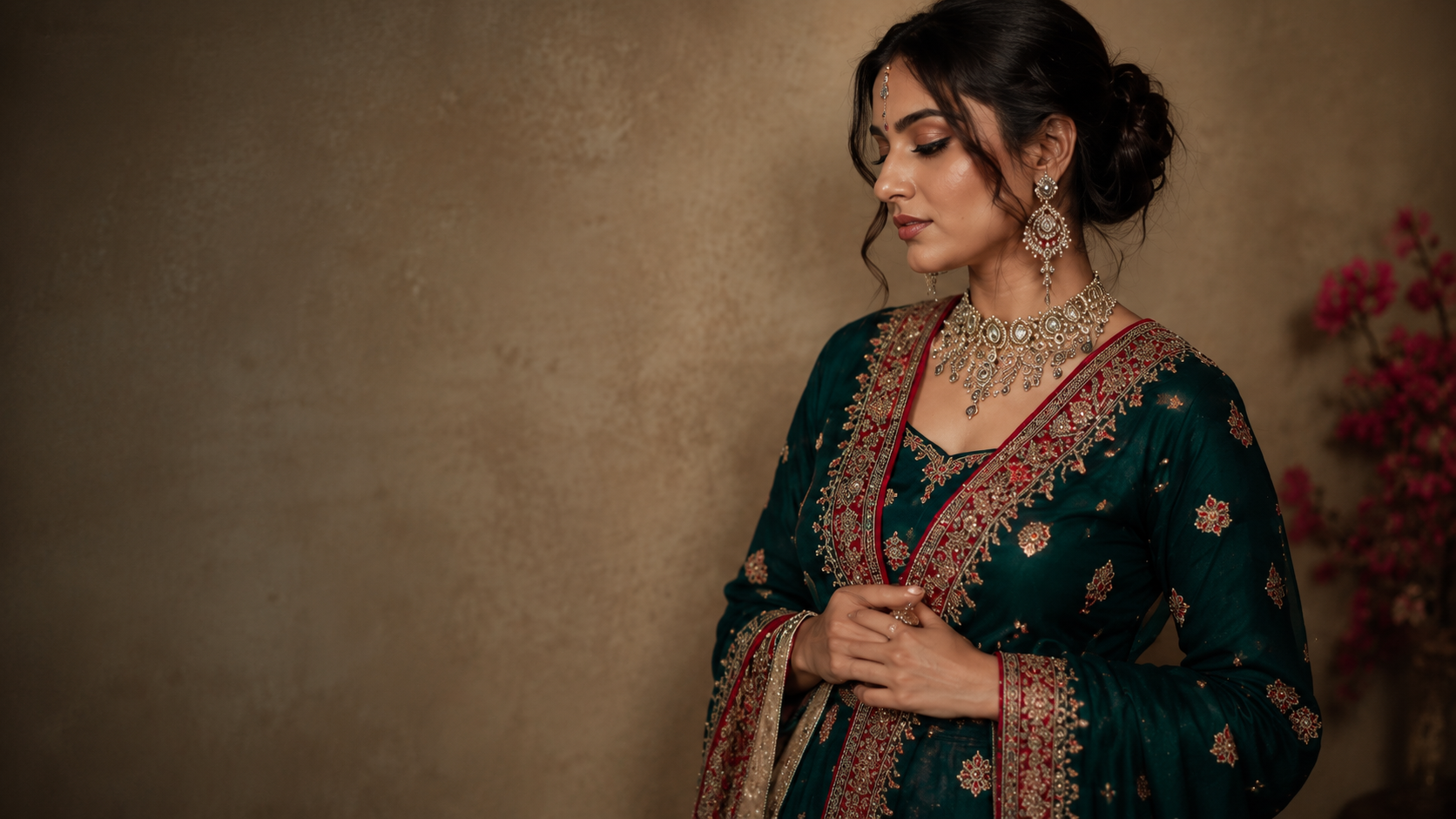
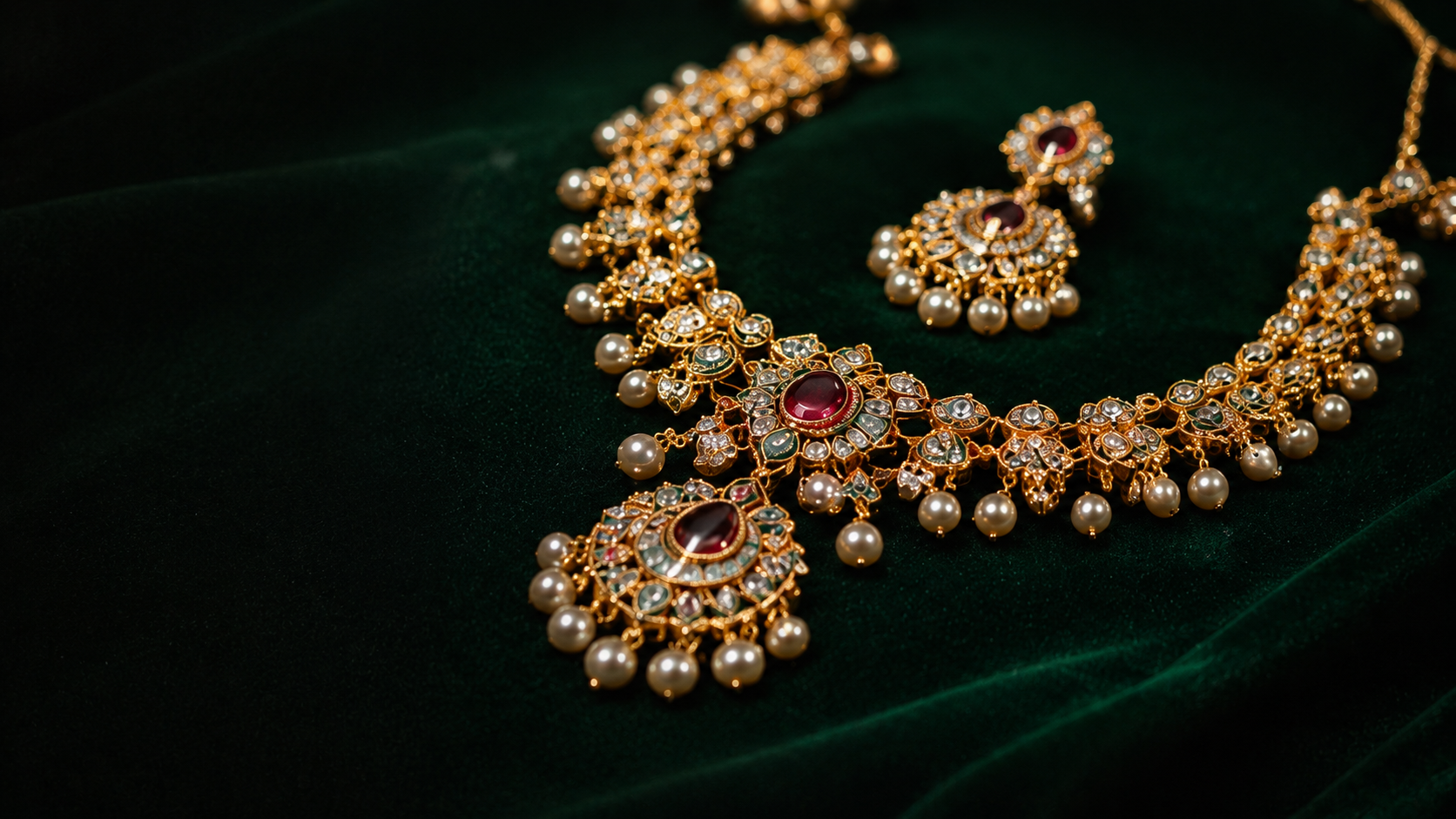
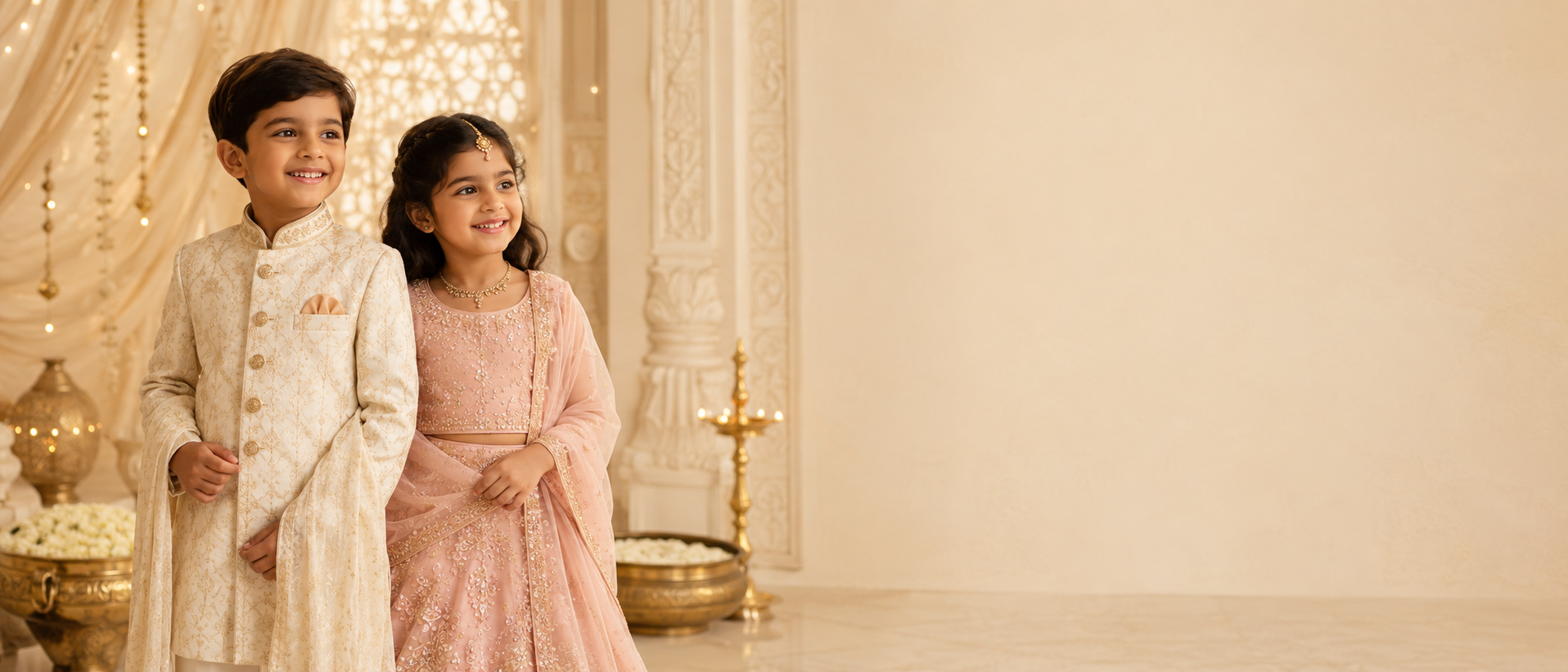
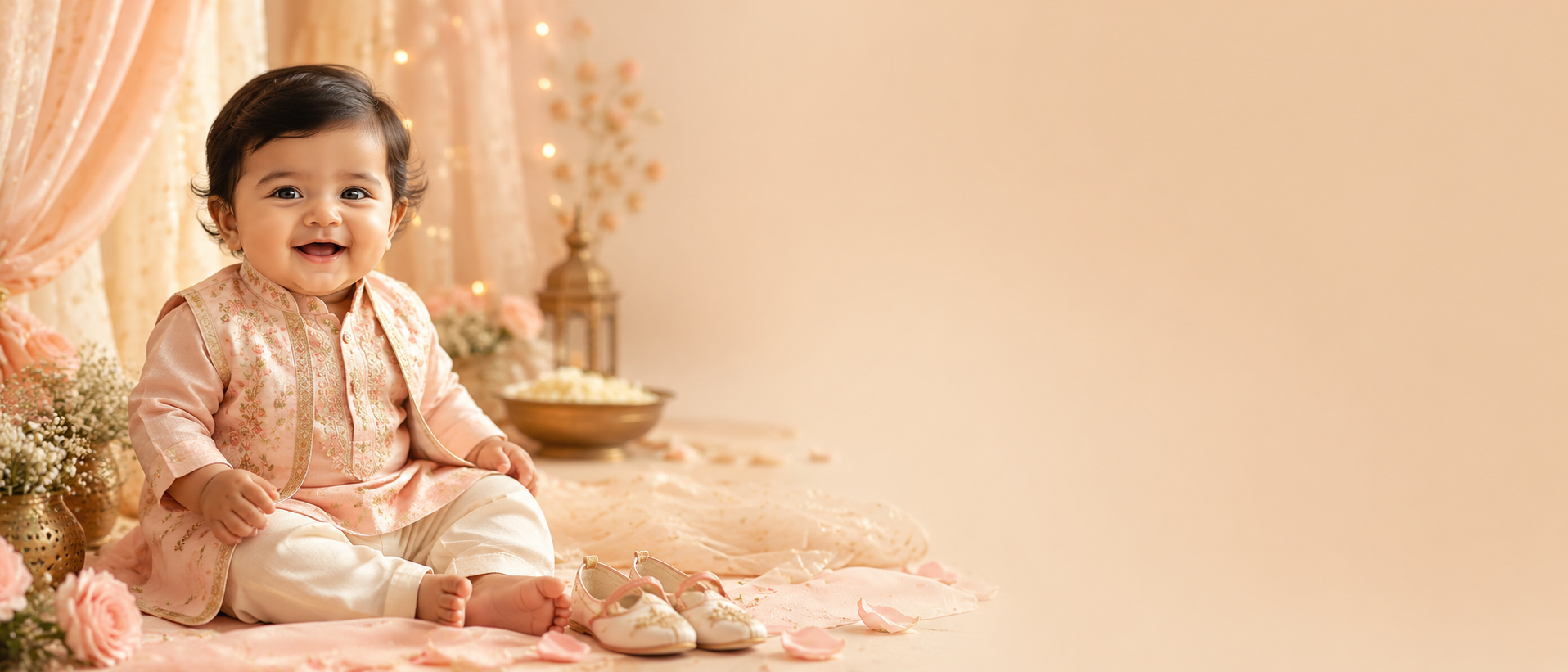
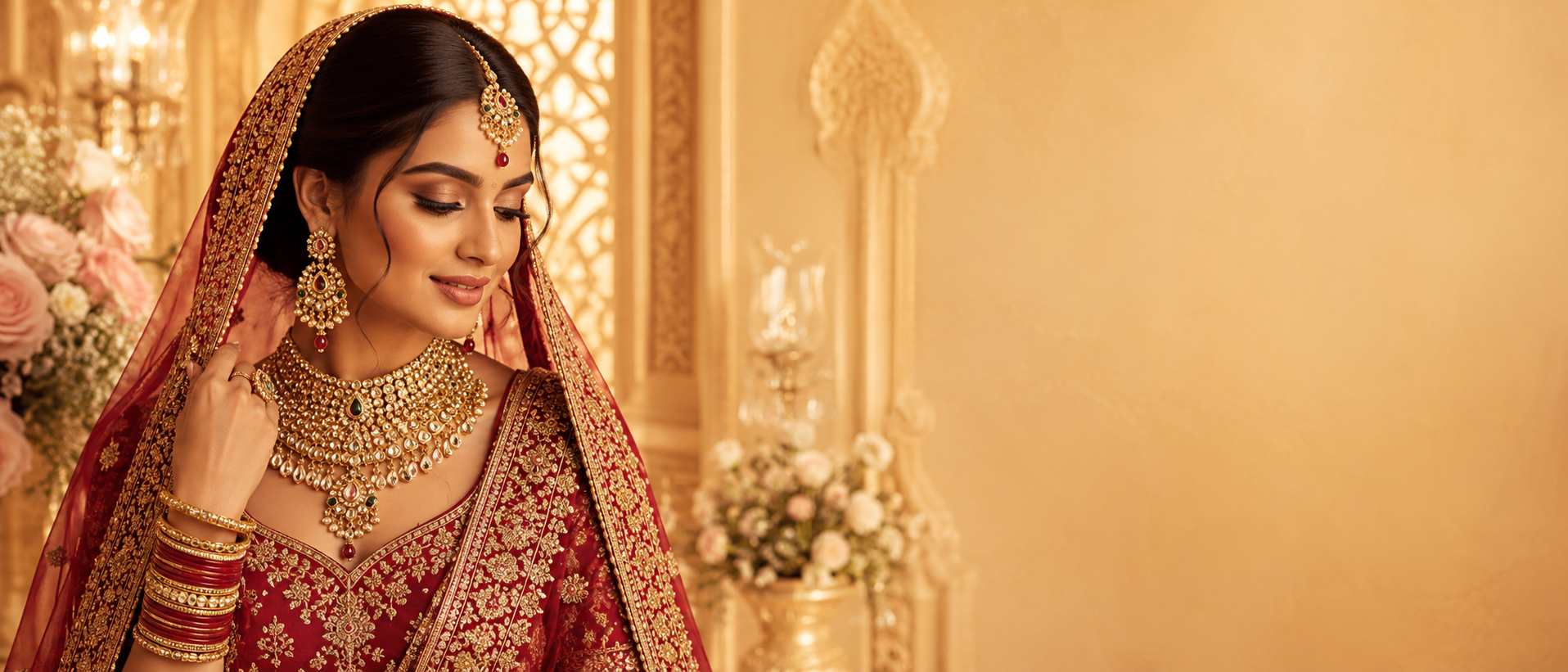
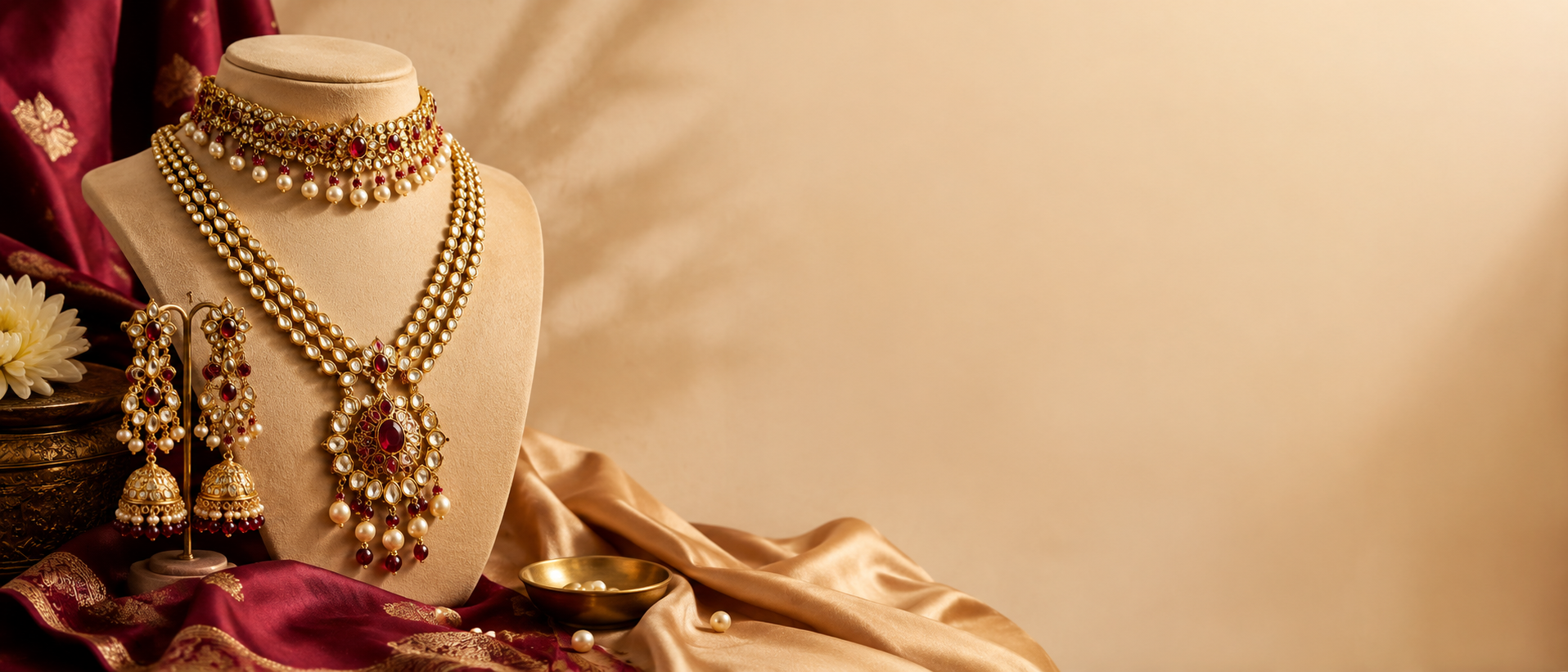
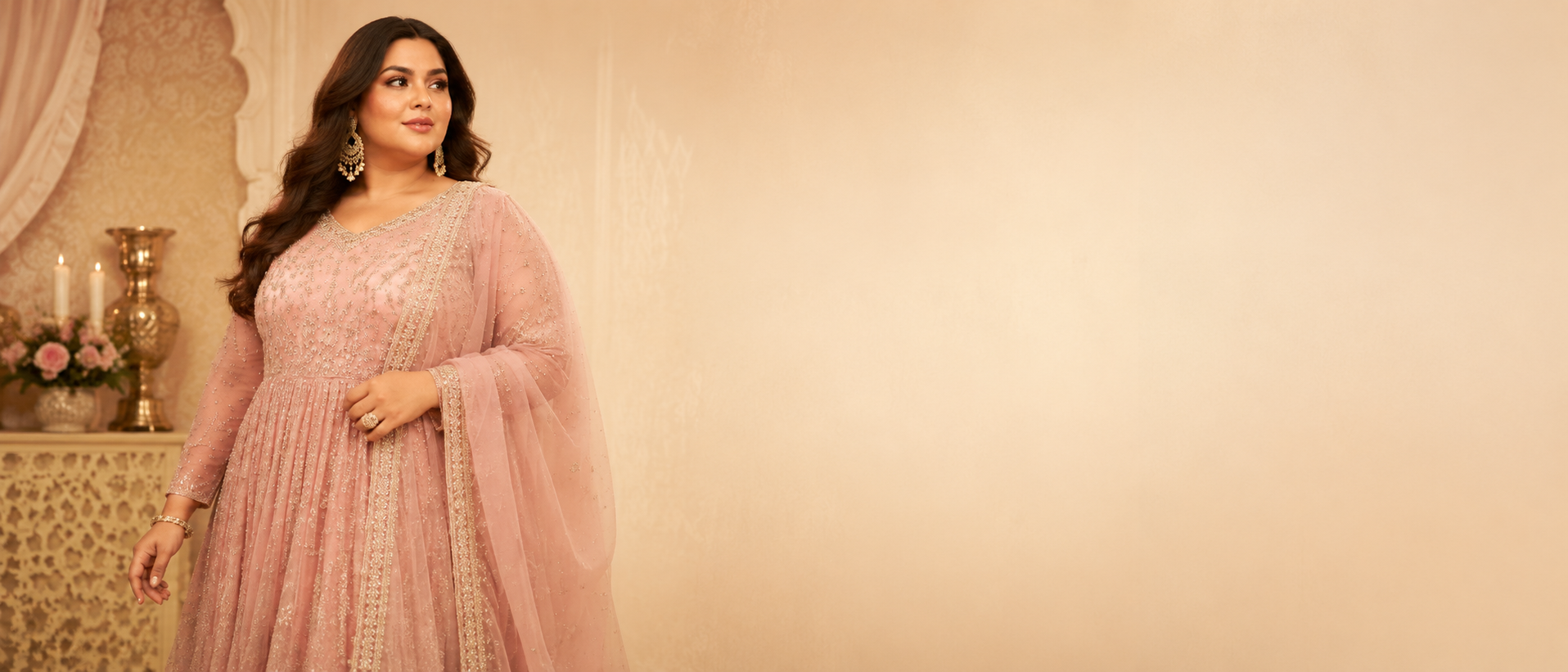
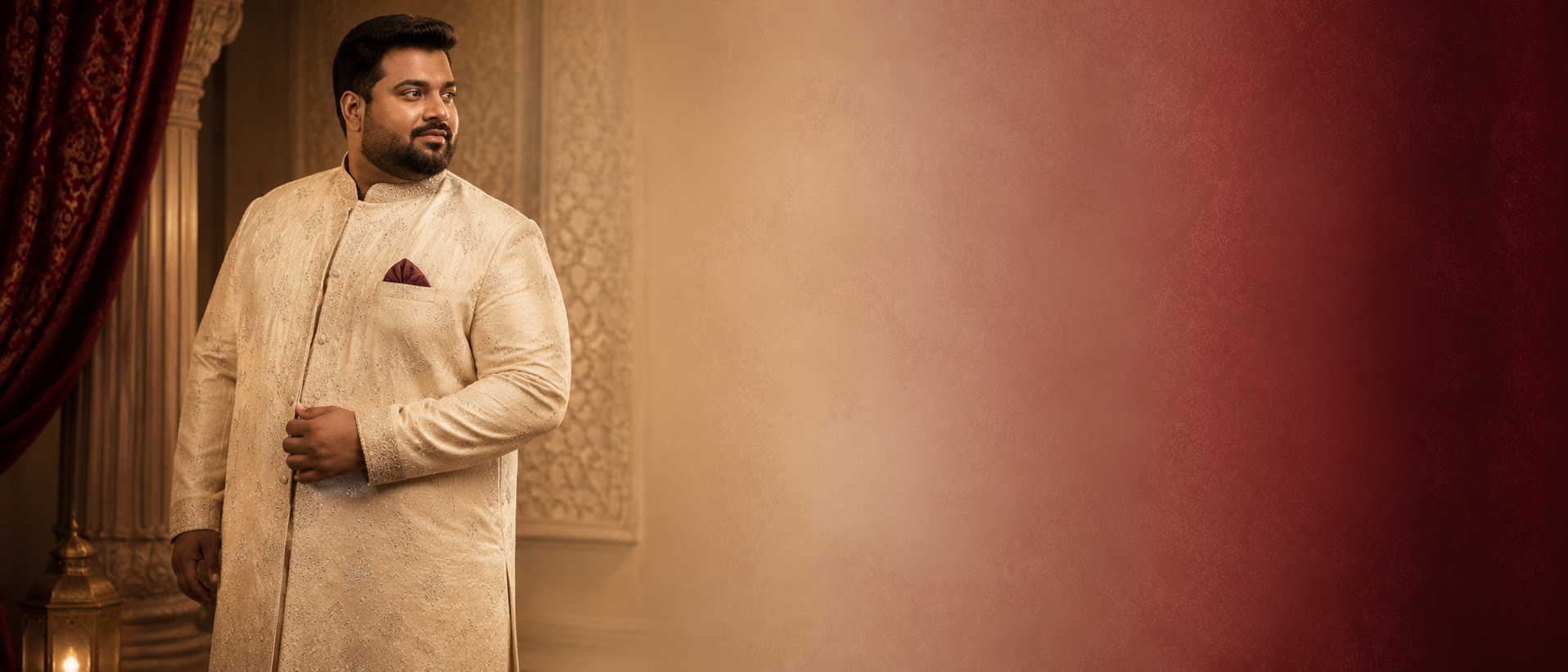
Saree, lehenga, anarkali, sharara, kurta, sherwani… the world of Indian clothing has a rich vocabulary, and it is easy to feel lost. This friendly glossary explains the main types of Indian outfits for women and men, what makes each one special, and when to wear it — so you can shop with confidence.
At Jay’s Indian Fashion we help customers navigate exactly these choices every day. Once you know the names, browsing our webshop becomes much easier.
Women’s Indian clothing
Saree
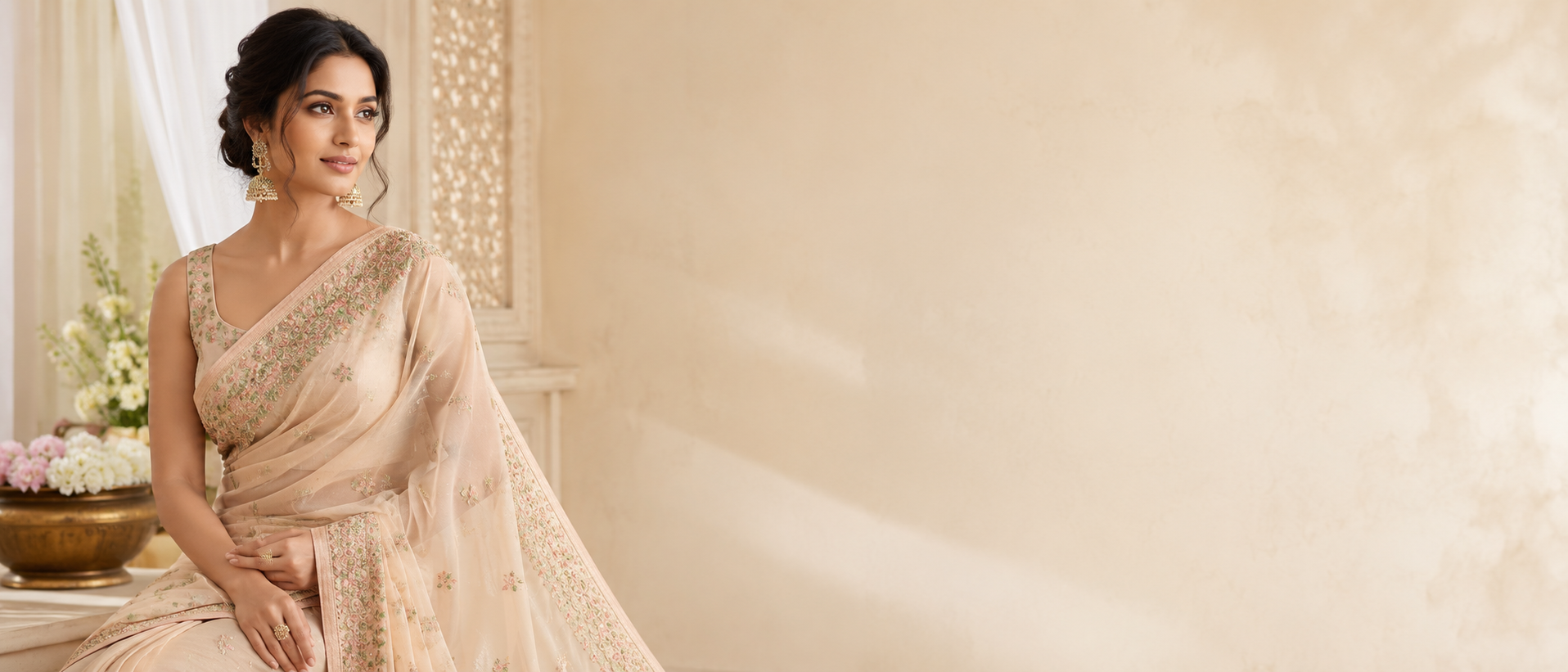
A single long piece of fabric (5–9 metres) draped elegantly around the body, worn with a fitted blouse and petticoat. Timeless and versatile — from everyday cotton to opulent silk and Banarasi for weddings. Explore sarees.
Lehenga
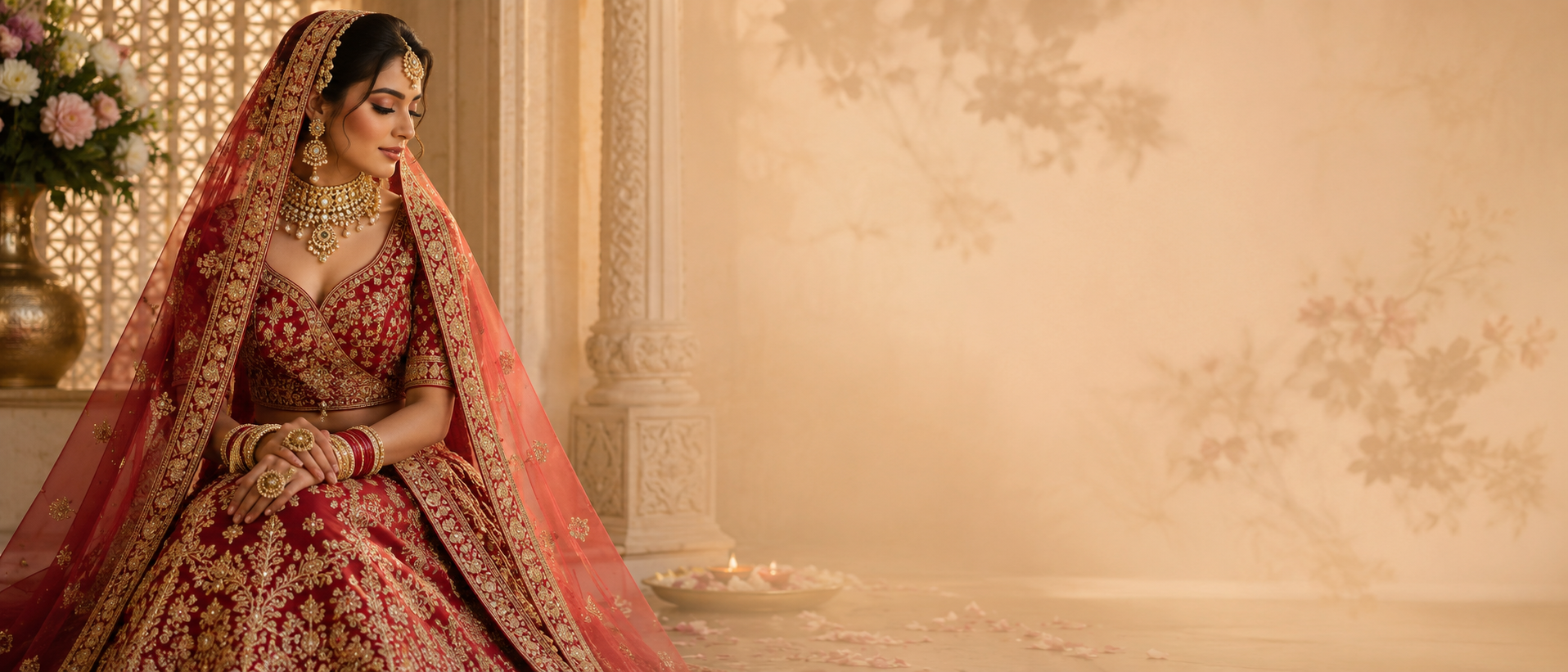
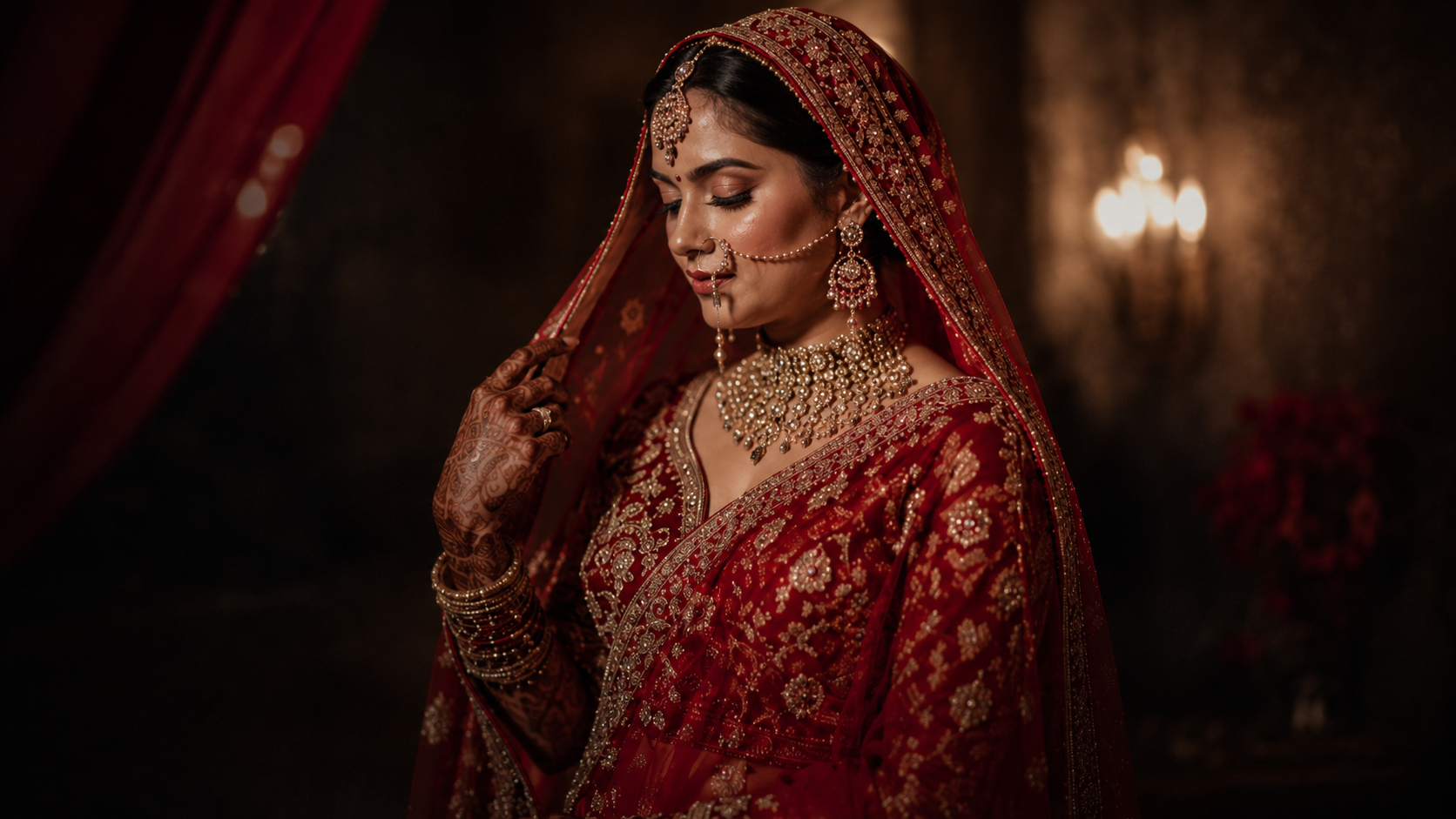
A three-piece showstopper: a long, flared skirt, a fitted blouse (choli) and a dupatta (scarf). The go-to for brides, the sangeet and grand receptions. Browse lehengas and womenswear.
Anarkali
A long, frock-style dress that flares from a fitted bust to the floor, paired with a dupatta. Graceful and flattering on every body type — perfect for parties and festive events. See anarkalis.
Sharara & gharara
Wide, flowing trouser sets worn with a short kameez and dupatta. The gharara flares from the knee; the sharara flares from the waist. Both are festive, comfortable and very on-trend.
Salwar kameez
A practical, elegant three-piece — a tunic (kameez), trousers (salwar) and dupatta. Great for daytime functions and everyday festive wear.
Kurti
A shorter tunic worn with leggings or jeans — the easiest, most casual entry point into Indian fashion. Shop kurtis.
Men’s Indian clothing
Kurta pyjama
A long tunic (kurta) worn over comfortable trousers (pyjama). The everyday staple — dress it down for a puja or up with a waistcoat. Shop kurtas.
Sherwani
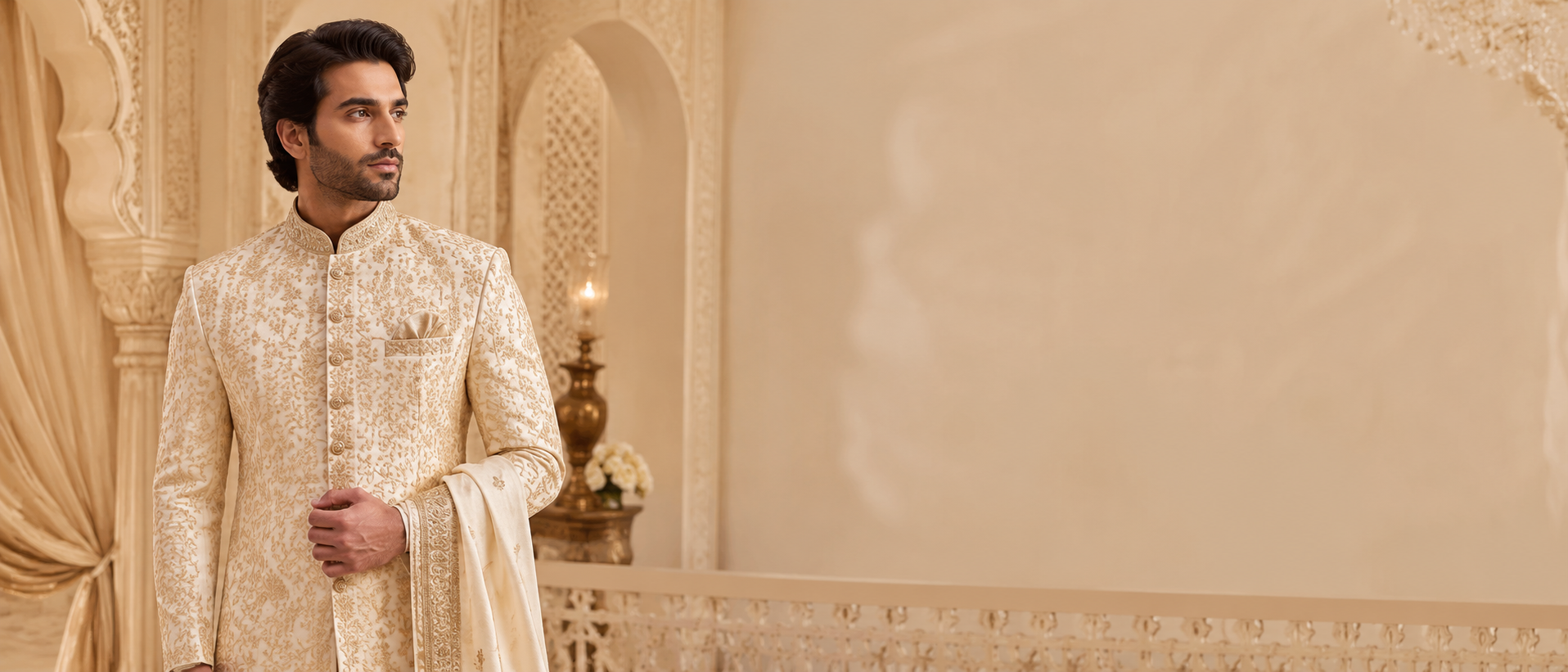
A long, structured, richly embroidered coat worn over a kurta, often with a churidar. The most formal menswear — the classic groom-and-ceremony choice. See sherwanis.
Nehru jacket (bandhgala)
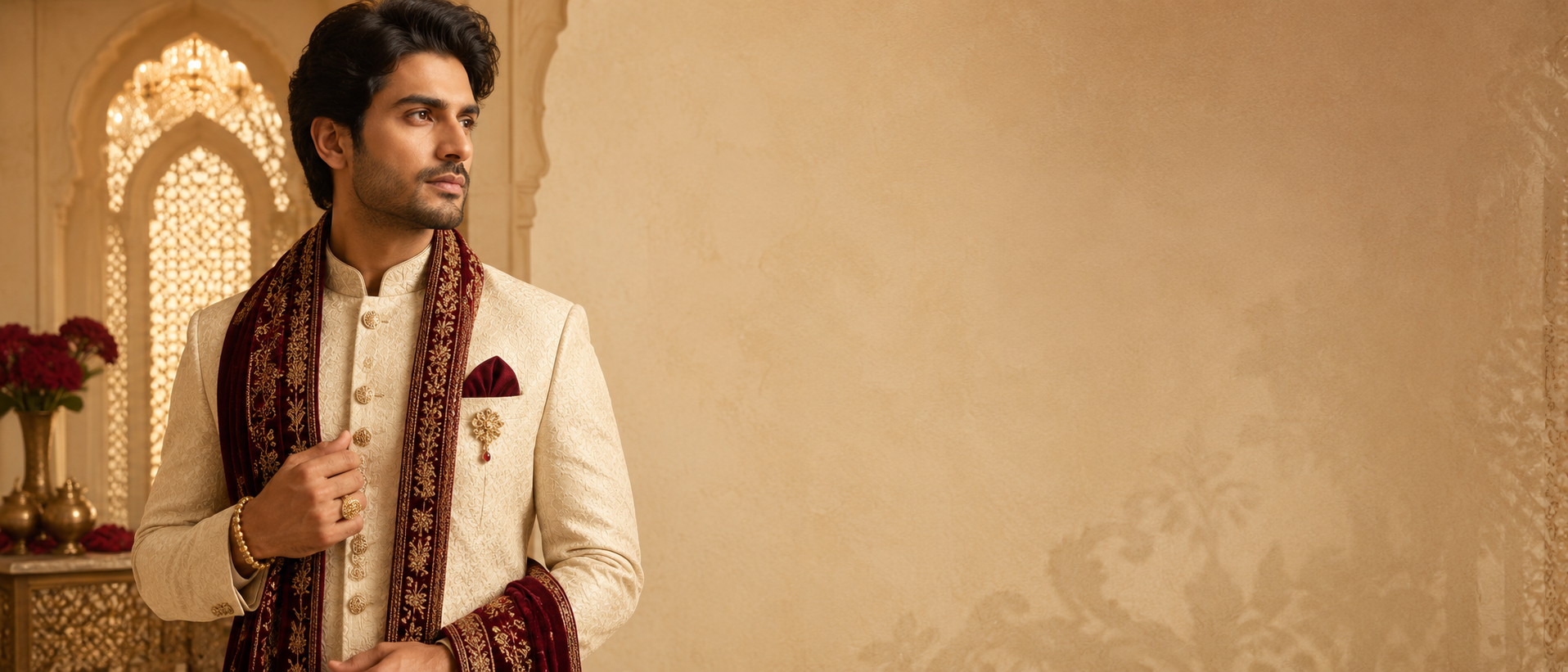
A short, tailored jacket with a mandarin collar, worn over a kurta for a smart semi-formal look. Endlessly versatile for receptions and parties.
Dhoti & pathani
The dhoti is a draped lower garment for traditional occasions; the pathani (Pathani suit) is a longer kurta with matching trousers for a clean, masculine silhouette. Explore menswear.
A quick word on fabrics
The same style looks completely different depending on the fabric:
- Silk & Banarasi: luxurious, structured, ideal for weddings.
- Georgette & chiffon: light and flowing, beautiful for anarkalis and sarees.
- Cotton: breathable and comfortable for daytime and everyday wear.
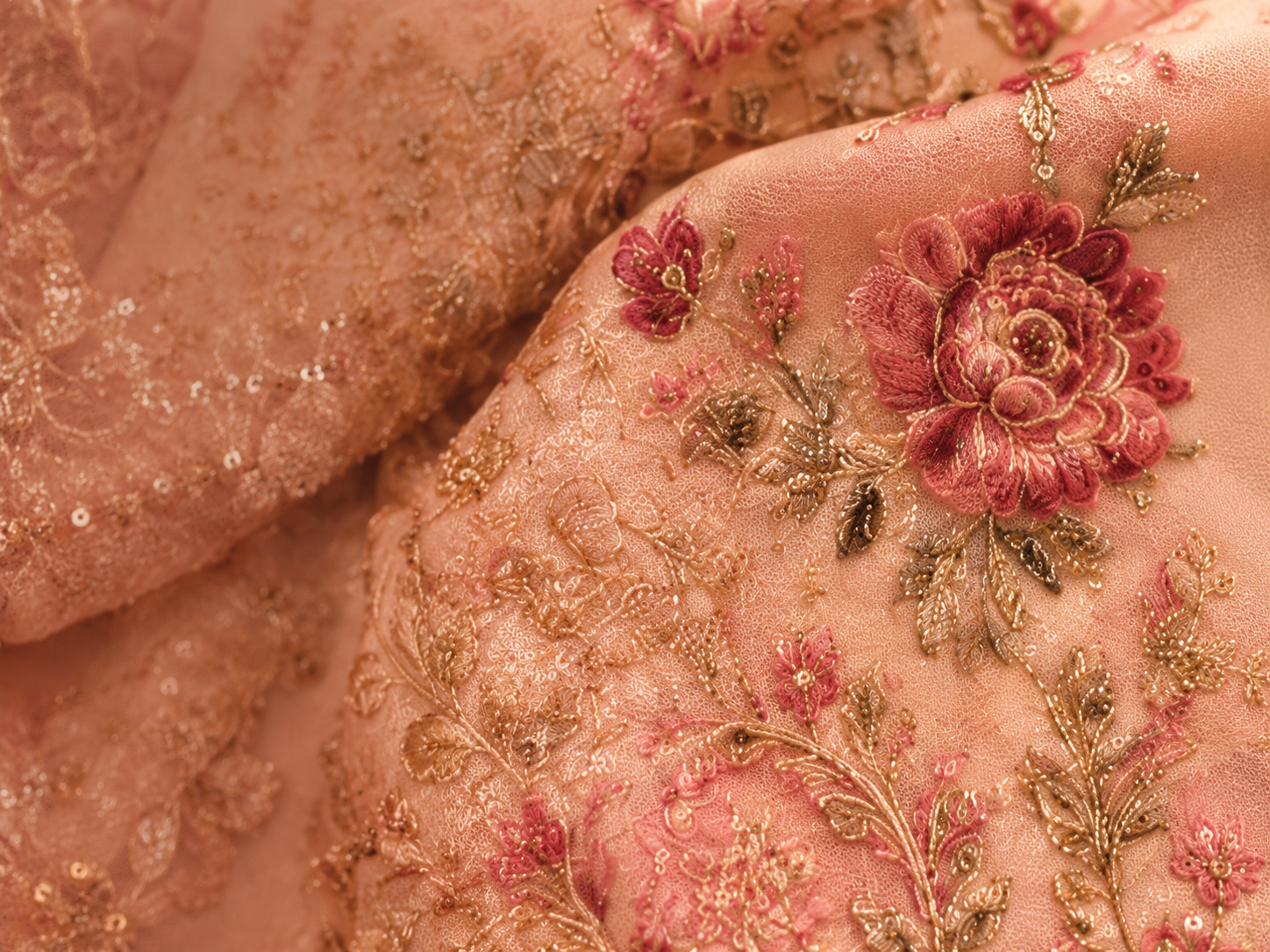
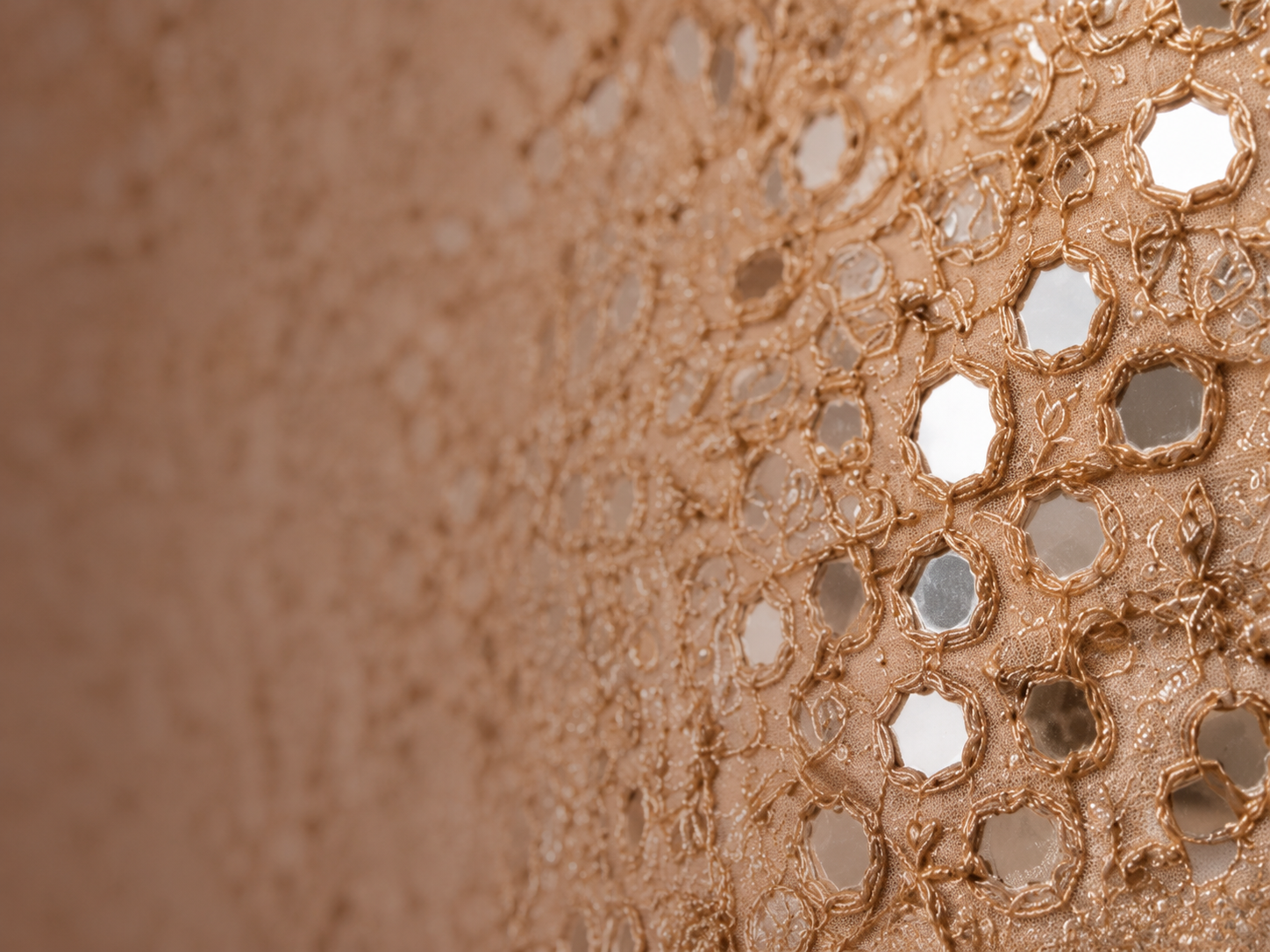
- Embellishments: zari, zardozi, mirror work and hand embroidery raise any piece to occasion level.
How to choose the right one
- For the boldest, most festive look: lehenga (women) or sherwani (men).
- For timeless elegance: saree (women) or a well-cut kurta with a Nehru jacket (men).
- For comfort and everyday wear: kurti or salwar kameez (women), kurta pyjama (men).
- Unsure of the fit? Many pieces are semi-stitched and can be made to measure.
Frequently asked questions
What is the difference between a saree and a lehenga?
A saree is one long draped cloth worn with a blouse; a lehenga is a stitched three-piece set with a flared skirt, blouse and dupatta.
What is the difference between a sharara and a gharara?
Both are wide trouser sets. A gharara flares from the knee (with a distinct join); a sharara flares gradually from the waist.
What do men wear to Indian occasions?
Most commonly a kurta pyjama for daytime, a Nehru jacket for semi-formal events, and a sherwani for weddings and formal ceremonies.
Which Indian outfit is easiest for beginners?
A kurti with leggings (women) or a kurta pyjama (men) — comfortable, affordable and easy to style.
Find your style
Now that you know the names, explore the full collection online or visit our boutique in The Hague for hands-on advice. Whatever the occasion, there is an Indian outfit that is right for you.